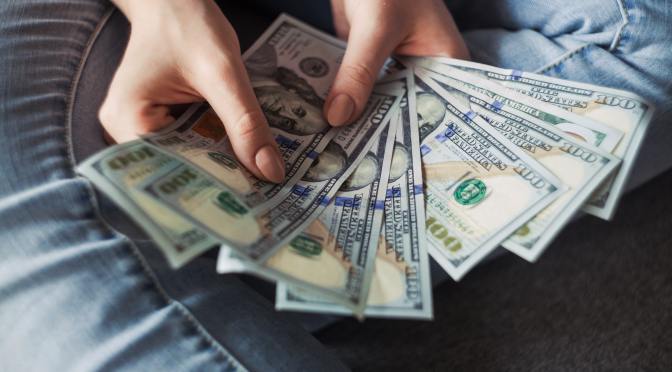
Moral Dilemmas: Pressures to live rich or die trying

Photo by Alexander Mils on Unsplash

By: Natalie Couture— Staff Writer (CSU Intern), The Drive Student Blog

Watching “Operation Varsity Blues” on Netflix, about the college admissions scandal that “shocked” the United States, left me thinking about the culture of wealth and its influence on this country. Though it was not a surprise to me that rich people would pay someone to get their children into top colleges – based on “prestige” that really doesn’t mean much of anything, according to the film – I couldn’t help but wonder what allowed those people to believe they weren’t doing anything that was completely rocked off the moral compass of right and wrong. Having money in extreme excess, like in amounts necessary to bribe colleges for admission, is the reality of so few people. Yet, the world idolizes these individuals and their lifestyles, and many strive to emanate these folks themselves. But at what point does that twist the ideas about what is right and wrong? Netflix

With TV shows like Keeping Up with the Kardashians and YouTube accounts of influencers of today, the lives of the wealthy seem to constantly be on display. In turn, social media allows those who live in extreme wealth to showcase their homes, lifestyles, and more at the touch of a few buttons. This display of wealth is, I’ll admit, aesthetically pleasing in moderation. But so many have become obsessed with the idea of becoming “filthy rich,” as they say, and it seems to lead to some questionable choices.

Photo by cottonbro on Pexels.com

As Michelle Ruiz’s Vogue article recounts, in the documentary, Naomi Fry, a New Yorker staff member says “In America, we love the wealthy and we hate the wealthy. They disgust us, and they fascinate us.” This much is true. The lives of the wealthy are always on display, and yet they seem so far removed from most people’s everyday lives. People often criticize the wealthy for being out of touch with reality, and they are. But so many people still want to be like them that they’ll stop at nothing to reach the top. Vogue

In America, we love the wealthy and we hate the wealthy. They disgust us, and they fascinate us.

Naomi Fry

The wealth gaps in America are undeniable, and the number of those in poverty compared to those who are rich is both upsetting and unprecedented. The world looks at celebrities and envies them for their fame, their fortunes, and the privileges they have because of wealth. Yet, the wealthy seem to live in a bubble unperturbed by the lives of those who truly struggle. Those who started from “nothing” even lose sight of where they are from and the struggles they used to face. Others are labeled as “self-made” billionaires yet were part of multimillion-dollar campaigns and shows before they were much older than 12 (@Kylie Jenner), which is miles more of a head start than those who start selling products from their homes on an individualized basis.

The bottom line is this: we see the world striving for wealth sooner than we see it striving toward accessibility to wealth. Because of this, those who look for wealth are willing to do anything to obtain it, much like those with wealth who will do anything to retain it. When will the ability to live what society deems to be a “good life” revolve around something other than money? Until then, I am convinced that most of the world will live trying to get rich or die trying.

Photo by Anastase Maragos on Unsplash

What They Didn’t Say

By: Micaela Shambee–Editor, The Drive Student Blog

young annoyed female freelancer using laptop at home
Photo by Andrea Piacquadio on Pexels.com

Dear 2025 Self,

Stay inside a little while, 

In a little while,

this will be over, they said.

Photo by Marcus Aurelius on Pexels.com

What they didn’t say?

I would be let go of my dream job.

I would be deemed a non-essential unemployment snob.

I would panic while getting a swab.

Photo by Eternal Happiness on Pexels.com

They didn’t say anything to me, God.

They didn’t say I would lose my best friend.

Or I would lose a family member near the same date.

They didn’t say she would have to FaceTime me to believe her fate.

They didn’t say all these people would die alone—the same way.

Photo by Liza Summer on Pexels.com

They didn’t say anything to me, God.

They didn’t say more people would die any day.

They didn’t say I’d take a pay cut to make ends meet today.

I’d have to tie first responders’ kids’ grey laces.

Smile in panicked-parents faces.

Then hide and cry in small children’s spaces.

Yet smile in their little, over-whelmed faces.

Photo by Keira Burton on Pexels.com

They didn’t say anything to me, God.

They didn’t say my tears would run dry.

Toilet paper would become impossible to buy.

Hand-sanitizer would become the new liquid gold

while April would be so cold.

Photo by Markus Spiske on Pexels.com

They didn’t say anything to me, God.

They didn’t say I’d be at home witnessing a gang shooting.

They didn’t say I’d have to mute my e-learning.

While the police sirens, and the medics roll out the red tape.

I never knew this new normal would be my fate.

Photo by Matthis Volquardsen on Pexels.com

Stay inside a little while.

In a little while

this will all be over, they said.

This poem was crafted in response to the State-wide “stay-at-home” order issued by officials on March 21, 2020.

Some Reviews For You

By: Natalie Couture— Staff Writer (CSU Intern), The Drive Student Blog

2021 has been a wiiiiillldddd ride so far, folks. Time seems to fly and yet crawl by at the same time, there’s no rhyme or reason for anything, and I can’t seem to stop procrastinating, so here’s a couple things I’ve read and seen to pass the time.

Picture of the book When I Was Puerto Rican.
Photo by Da Capo Press.

First up is When I Was Puerto Rican by Esmeralda Santiago. This book is a glimpse into the colonization of Puerto Rico, gender norms and values that shape a story’s setting, and one girl’s journey to becoming a señorita.

Rating: 4 out of 5 Stars

“Clear-eyed, quietly powerful, and often lyrical: a story of true grit.”

Kirkus

If you’re a fan of novels and a fan of memoir (or maybe even one or the other), Esmeralda Santiago’s When I was Puerto Rican feels like both of these genres combined. As a vulnerable, personal story that reads like a well-crafted novel rather than a reflection of one’s own experience, When I Was Puerto Rican takes readers into the world of Negi’s childhood, where she learns to become her own person in a world of imperialism and the expectations of society and others. Santiago deliberately structures her story in the truest form to her development, seamlessly cataloguing her perspective at various moments in her childhood as she delves into the events of her years “growing up” without giving too much of a glimpse into who she will yet become.

From several moves, to and from different schools, cities, and the like, to a final stop in Nueva York that Negi only heard stories about as a child, Santiago recalls the political climates in Puerto Rico, how they change in the midst of election season to show “care for la gente” only to disappear after the results are in, and how her family works to meet its ever-growing needs as time goes on. Kirkus review the story and calls it “Cleareyed, quietly powerful, and often lyrical: a story of true grit.” Kirkus

Photo by HBO from Chronophlogiston.

Next is Chernobyl, the 2019 5-part series from HBO that shows a story of mankind’s follies, determination, and will to live.

Rating: 5 out of 5 stars.

…Eye-opening, exposing, and meticulously crafted.

Chernobyl catalogues the disaster that occurred in Pripyat, USSR in April, 1986 at the Chernobyl Nuclear Power Plant. For those who may have grown up after this disaster, only to hear briefly about the event in history books, this series is eye-opening, exposing, and meticulously crafted. World Nuclear Association

Chernobyl, though a fictional reenactment of the events that occurred both during and after the Chernobyl disaster, which stemmed from a safety test gone wrong that caused an explosion in Reactor 4 at The Chernobyl Power Plant. The disaster resulted in an official death count of between 30 and 40 individuals, although the exact number of deaths resulting from the event is still unknown. The series provides a unique perspective on historical events that showcase humanity and its heroes and expose the Soviet socialist systems that worked to cover things up. World Nuclear Association

By the end of the first episode, you’ll be reciting “How, exactly, does an RBMK reactor explode?” and by the end of the series, you’ll probably want to visit the site. (According to my research, it’s open for travelers, and you can even stay in a nearby hotel. If you’re looking for an up-close look in the comfort of your home, check out the TikToks made by @victoria_chernobylguide.)

Photo by Pietro Jeng on Pexels.com

dress pants? No Thanks.

By: Natalie Couture— Staff Writer (CSU Intern), The Drive Student Blog

The Coronavirus Pandemic has changed the way the world does business.

Photo by Windows on Unsplash

When the Pandemic began, people wondered when things would go back to normal. When cases skyrocketed and most of the world was forced into their homes, people began to wonder if things would go back to normal, and if they did, what would this “new normal” look like?

For awhile, working from home was the “new normal.” For many, this is still the reality. Immediately, schools started functioning online. Office buildings shut down, and many workers, from all disciplines and fields, found themselves scrambling to create a space for work in their homes.

“Some of the largest companies in the world have said that work from home will be a permanent fixture.”

The Team at Employment Hero

What many people have realized is that working from home requires a certain amount of discipline, and making oneself available for the job at all hours of the day and night is not a great way to achieve balance. Working from home is, in some ways, a luxury. The ability to throw in a load of laundry or make a home-cooked lunch instead of ripping open a Lunchable is a way to both recalibrate after staring at a screen and to be productive in the process. But productivity – that seems to be the keyword, especially in meetings.

The world works to get things done. The world works to make progress, on projects, portfolios, and the like. Most every profession that can be operated virtually, even remotely, revolves around this process through the use of computers. Productivity requires personal responsibility, absolutely, and professionalism requires accountability all the same. But there’s one thing that isn’t required to be productive, to make progress, or to be professional: dress pants.

Photo by Dollar Gill on Unsplash

Many people sit at home, in their virtual office spaces, wearing whatever they want, and dressing things up a bit if there’s a big meeting to attend. And let’s be honest, the world is more comfortable that way. When people have the freedom to wear what they want to work (within reason, of course, and by still looking professional from the waist up when necessary), their productivity doesn’t decrease. It doesn’t change just because people are comfortable in their pair of sweatpants and a blazer. The work still gets done. So, why on EARTH can’t people wear jeans instead of dress pants to work?

Des Sinkevich for Penn Foster says that “If you’re wearing clothing you’re not comfortable in, clothing that’s sloppy, or just isn’t “you,” you’re not going to feel good about yourself and your boss will see that, too.” So, what’s fuss about jeans “not being professional enough for business causal” all about? Penn Foster

If the pandemic has really changed the way companies do business, then when it’s time to open back up, and when it’s time for folks to take elevators up to office floors again, there will be less emphasis on “dressing professionally” and more focus on the quality of the work itself. If the world could run with at-home workers in sweatpants, and if working from home becomes the solution for some of the world’s largest companies, then the world can run with workers in jeans at the office. It’s only human to want a little more comfort.

Photo by Uriel Mont on Pexels.com

Displaced Dreams: Where Do We Go From Where We Didn’t Expect To Be?

By: Natalie Couture— Staff Writer (CSU Intern), The Drive Student Blog

At one time, if anyone asked me if I was planning on moving back to my hometown, I would’ve laughed and said “there’s absolutely no way.” Well, then circumstances changed.

Photo by Breno Assis on Unsplash

Nicole Policarpio writes, “I always envied my western friends who had to leave their homes when they turned eighteen. They were forced to live on their own, and even though it was hard for them, they matured faster than everyone else.” The Ascent

Well, that was me.

I moved away from my small midwestern hometown (in one of those states that people really never remember because… they’re not really very important) a month after my 18th birthday, into the sprawling metropolis of Chicago– to its South Side, nonetheless. I remember my family warning me before I left: “Make sure you always have your guard up. People there aren’t as nice as they are up here.” They probably didn’t realize that I already knew that “North Dakota Nice” wasn’t actually nice at all, rather a knowledge of when to hold one’s tongue, but nevertheless, I left and watched out for myself.

I did mature faster when I left home… I refused to let myself down.

And wow– leaving that hometown was the best thing I’ve ever done for myself.

I believe I did mature faster when I left home, not because I wasn’t mature before, but because I refused to let myself down. I told myself I wanted to leave that small city where I was born and raised, where it only took me 15 minutes to get across town, and I did. And I loved it. And if you would’ve asked me even a year ago today if I would’ve thought about leaving that city, I still probably would have told you “no.” At the very least, I would have said “not right now.”

Photo by Leohoho on Unsplash

Coronavirus took (most of) America by surprise in February/March of 2020, and its effects spread far and wide by April of that year. In Chicago, it meant that my student teaching experience was cut short, and I was teaching students asynchronously and through a computer screen for the remainder of the semester. I was confined to my 15th-floor apartment, in a building that athletes at my University frequently commuted from. There was nowhere to go; reality changed in the blink of an eye, and by May, things didn’t seem to be changing.

I decided to spend some time back in my hometown for a few reasons. First, there was a graduation in the family. Second, I missed my sister, and third, I wanted a sense of normalcy. Back in my hometown, life was business as usual. There were few, if any, cases of COVID at the time of my arrival, and people begrudgingly wore masks if they were required to. The sense of normalcy remained for months — until my little town of Minot, North Dakota became, as Atul Gawande called it in his article for The New Yorker, “The Worst-Hit County in the Worst-Hit State in the Worst-Hit Country.” The New Yorker

I worried that I was going to lose all that I had learned in Chicago if I came back to my conservative hometown. But instead, I realized what an incredible opportunity it was to move back- one filled with possibilities that might even alter my own ideas about “what comes next.”

My time in my hometown that summer was unforeseen. I came back thinking I’d stay for a couple of weeks, and so many things snowballed that I decided to stay a month, and then two. I started to realize, by mid-summer, that my life in Chicago was starting to fade. I knew I’d need to find a new apartment, but my friends weren’t looking to move. I knew I’d need to find a teaching job, but I had only gotten a couple of calls. I took the time to ask myself “what am I going to do?” and I thought about my concerns.

  1. I wanted to know if moving back would mean that I was a failure or an opportunist. In the case of COVID, I resorted to understanding that I was making the best decision for myself at the time.
  2. I worried that I was going to lose all that I had learned in Chicago if I came back to my conservative hometown. But instead, I realized what an incredible opportunity it was to move back- one filled with possibilities that might even alter my own ideas about “what comes next.”

In Chicago, I learned how to be a teacher: one that thinks of her students as individuals with their own experiences, thoughts, and feelings that informed their schoolwork and personalities. I learned that my inherent biases and inherent privilege would impact, drastically, the way that I teach if I do not take the time to continuously grow as an educator who believes in social justice. I got so lucky when I found a place to work, in my hometown, that encouraged me to use those skillsets to help better educational systems in my home state. I moved back to North Dakota in August, and I’ve been here since.

My time spent in Minot has allowed me to consider my experiences through a new perspective. I think of how much I’ve grown, both personally and professionally, since I left this place when I was 18 years old. I needed to be somewhere else– I needed to see something different. But now I have tools in my box that can help me repair some of those broken things I referenced often in my college career out of state. I have a chance to make a difference in the places where I recalled change really being needed.

So, here I am, writing from my living room in my hometown of Minot, North Dakota, wondering what comes next. Where do I go from here, from this place that I never thought I’d be again? Do I stay? Do I go?

All I know is that I will continue to grow, regardless of where I’m planted. And, just maybe, being back where my life began isn’t such a bad thing after all.

Coping With Covid: Crafting Amidst Chaos

Photo by Karly Santiago on Unsplash

By: Natalie Couture— Staff Writer (CSU Intern), The Drive Student Blog

When the world retreated into quarantine in 2020, many were left at home with all of the duties, obligations, and laundry lists of cleaning tasks that always loom over people’s heads. Some coped with exercise, some coped with binge-watching noteworthy shows (Hello, Schitt’s Creek), and some coped with learning to meditate or do yoga.

But when all those things get tiring, people need more hobbies. I am here to recommend crafting.

I used to love going to my local craft store or JoAnn Fabrics with my grandma, watching her pick out the fabrics for her next dress-making project or picking up a painting set for me to keep occupied. I remember painting by numbers and coloring at the table at daycare, always trying to get my markers to stay in the lines. As I’ve grown older, I’ve wondered, “why don’t I find a crafty hobby?” and the answer usually revolves around “because I don’t have time to craft.” But truthfully, if COVID has taught many of us anything, it’s probably that the balance between work, chores, and taking some time for ourselves is necessary to stay sane when we have nowhere else to go. And it may even be necessary to stay sane even when we have somewhere to go.

“Making something beautiful in times of crisis is a great way to distance oneself from the “doom and gloom” and to find happiness in small ways.”

According to NMPI, an increase of sales in hobbies areas have grown since the pandemic started, especially in realms of musical instruments, toys, and crafts. “People are searching for both activities to entertain children at home since schools closed as well as activities to occupy time and facilitate de-stressing,” as stated by the Market Trends Report. So, as people are stuck at home, realizing that they have no hobbies, I encourage exploration, particularly in the form of arts and crafts. As it turns out, making something beautiful in times of crisis, which it seems like don’t slow down even with the slow reopening of businesses, cities, and travel destinations, is a great way to distance oneself from the “doom and gloom” and find happiness in small ways. NMPI

If anyone might be looking for a hobby, I’ll list a few of my favorites here. (If you’re wondering whether or not I follow-through and finish all of the projects I start, the answer is usually “no,” but I sure still have fun with the process!)

Photo by Annisa Ica on Unsplash

I encourage people to branch out and try:

  • Crocheting or Knitting
  • Cross-Stitching (Note: If you don’t want to buy the crazy mirrored glasses to see the work, you will have to hold these projects very close to your face.)
  • Coloring using “adult” coloring books (Coloring book of swear words can be found or ordered at your local bookstore.)
  • Sewing
  • Painting
  • Calligraphy and Lettering (Recommended for those who love to buy pens.)
  • Paint-By-Number or Diamond Painting

And if you’re feeling adventurous, or maybe a little “I’d like to make money from the things I create,” here’s a few of Savvy Budget Boss’s ideas for at-home DIYs that can make you a few extra dollars while you’re at it! Savvy Budget Boss

  • Painted Succulent Pots
  • Embroidered Notecards
  • Origami Garlands
  • Blanket Ladders
  • Fluffly Blankets
  • Macrame Plant Hangers
  • Mason Jar Tissue Holders

The possibilities are endless!

Photo by Vitu00f3ria Santos on Pexels.com

Honesty is (more than ever) the best policy

Photo by Luis Villasmil on Unsplash

By: Natalie Couture— Staff Writer (CSU Intern), The Drive Student Blog

Set alarm for 7:00 AM. Go to sleep.

Wake up. Coffee. Breakfast? Maybe. Get dressed. Bathroom. Out the door.

Work. Meetings. Work. Lunch. Work. Meetings. Work. Drive home.

Dinner. Clean. Grad school, kids, other obligations – you pick. Settle down. Shower.

Repeat.

That’s the high-level overview schedule. What things used to look like, maybe, if there’s no kids to take care of, only oneself to worry about, and no other outside obligations like extracurriculars or going to the gym or hanging out with girlfriends or the guys.

And work is right there at the center.

Then? Boom. Pandemic.

It’s no wonder that America is in a mental health crisis. It’s a bit of a surprise that fewer people talked about this pre-Pandemic, but it’s less of a surprise now that it’s all people can talk about. Mental health is an unavoidable conversation. According to Paul Gionfriddo, “As the pandemic relentlessly persists, we are seeing the highest levels of anxiety and depression reported since the pandemic hit the U.S.” And yet, the levels weren’t low before. They’re just higher now. Mental Health America

“For those who use their ever-moving life and constant obligations to avoid thinking about their own mental health struggles, being at home… leaves no room for escape.”

Isolation can bring out some of the worst in people. For many, their personal experiences show this in undeniable ways. However, being alone isn’t always the issue – for some, it might be being alone with stress that is the worst part of it all.

America, for the most part, stopped moving in March of 2020, but the obligations of everyday life didn’t slow down with everything else. Oh, you typically went to work in an office building? Congratulations, your kitchen table is your desk now. Oh, your children went to school or daycare every day? Congratulations, they’re at home with you now. Oh, you attended classes in-person? Congratulations, you’ll be talking to your professors through a computer screen for the rest of the semester. Some are thankful that despite the Pandemic, life kept moving, even at home. But for those who use their ever-moving life and constant obligations to avoid thinking about their own mental health struggles, being at home – sometimes alone, other times with others – leaves no room for escape, and none of those other stressors go away.

Working from home, especially, can be somewhat of a dangerous environment for those who thrive on doing good work exactly when it’s needed, or rather, requested. When there’s upcoming projects to get done, and there’s more to come after those are due, the pressures to perform and continue to be productive – outside of ordinary work hours – are huge. So what happens when the other pressures of life, and the pressure to perform at work, become overwhelming, and the levels of productivity start to plummet due to stress?

Photo by Liza Summer on Pexels.com

Well, communication has to be key, and along with that, honesty is so important. There is not one person on this planet who could be able to say that the Pandemic has not altered their life, and America is moving toward a place where saying that it’s been a bad mental health day, week, month, or even more is a part of communication that cannot be left out.

Boundaries are important, but for those who struggle setting those boundaries, who struggle shutting off the phone, the emails, and the ever-growing lists of tasks, those days when it’s hard to get up in the morning or hard to even enjoy spending time with loved ones due to stress are a good indicator that it’s time for a break.

Ashira Prossack writes, “at its core, taking a vacation is simply taking time off away from and disconnected from work. It requires nothing more than turning off your phone and laptop and not doing any work.” That doesn’t sound too hard, right? But the key to taking a break, or a vacation, or whatever one wants to call it, is that in order for the break to be productive, the stresses of missing work need to not exist. Forbes

Photo by Max van den Oetelaar on Unsplash

So, when it’s time to take a break, be honest. If one’s place of work has a low tolerance policy for those who struggle with mental health, submit vacation time and call it good. But chances are, if one is valued by their workplace, then their honesty will be valued, they will be appreciated for what they do already, and work will be happy to welcome them back when it’s time to do that.

Feeling overwhelmed is a sign that the balances in life are no longer being maintained. It’s an indication that the time has come for a reset, a pause, or just a break. The pressures of life will always continue to impact daily living, but there comes a time when saying “no, I have to take some time for myself” is completely warranted, appropriate, and necessary. For those who are dedicated to their workplaces, admitting these feelings of burnout can be difficult, but if the work is truly valued, then supervisors understand that those who create and do the work deserve a break. So, be honest, and take that vacation time to get a little reset.

Photo by nicollazzi xiong on Pexels.com

LETTER FROM THE EDITOR: A BRAVER NEW WORLD

Photo by Anna Shvets on Pexels.com

By: Micaela Shambee—Editor In Chief, The Drive Student Blog

Last year, almost exactly around this time, the world stopped in its tracks due to the novel Coronavirus. The rapid changes that took place seemingly overnight left many stunned and gripping with the reality of a new normal. For a year, we have been living in a dystopian novel of sorts, complete with masks, riots, overt racism, and a dictator-type political regime while coping with the loss of loved ones and fears of illness and death. If this were before the year 2020, this would be some cheesy plot from a Hunger Games sequel. No one would think that the human population had nearly met its match.

Photo by cottonbro on Pexels.com

Ironically, this is not the first time we’ve dealt with a health crisis of this magnitude. Unless you took a history course or are well versed in English literature, you wouldn’t recall the Black Death, also known as the Bubonic plague pandemic, which reached England from Asia in 1348. One of the most deadly plagues in human history, the Black Death, was spread by flea-infected rats and infected people on the continent. This plague wiped out more than half the population. Not to mention, England did not have the advantage of modern medicine to help fight the virus. With one fell swoop, the plague ended the Hundred Years’ War. It decreased the population size, bringing along with it a shortage of labor, a rise in wages, and extreme resentment by lower classes that had to seek refuge in government assistance.

Sound familiar?

Swap the rat with a bat, and you have a dramatic vignette of the United States. All sarcasm aside, the similarities are striking. We are witnessing the rich get richer, and the poor get poorer—depending exclusively upon government programs that the rich have exploited egregiously (we’re looking at you PPP Loan program). The nation is suffering from high numbers of deaths from the Coronavirus, 577k to date, while race relations have reached a fever pitch. From Black Lives Matter to Stop Asian Hate, the rise in hate crimes towards minorities rose all over the United States, some recalling hate crimes that resemble much deadlier times in the nation, like Jim Crow South and Japenese intermittent camps. One may not see the difference between 1348 England and 2021 North America. However, the differences between the two events spark some hope and are painting our new future.

Photo by RODNAE Productions on Pexels.com

Modern medicine in the U.S. has led to many of vaccinations, and some released all within the last year. The U.S. has elected a new President and the first-ever woman vice president. Finally, much-needed financial relief through government stimulus checks and vaccinations for the public has given many hopes of returning to normal or at least experiencing a better, new normal.

So what will life look like after Coronavirus?

Are we even pass the virus yet? Many experts believe the goal of 80-90% herd immunity is out of reach, leading many to agree that for now, we will be living with the virus. However, the CDC has relaxed some restrictions, such as wearing masks in public, though only for those vaccinated. These conflicting reports leave many at an impasse, trying to figure out if continuing to wear masks, even though vaccinated, is the best path to protection against a virus that can develop new variants. Additionally, many people are still hesitant to receive many of the different vaccines for various reasons, citing health concerns, lack of time for extensive clinical trials, and access to the vaccine. Chicago State University, which opened its mass vaccination site in early April, is one of the only places on Chicago’s South Side that provide access to a region ravaged by COVID-19. However, even with this access, mass recalls of the Johnson & Johnson vaccine and the potential side effects of other vaccines still concern many.

Photo by RF._.studio on Pexels.com

Moving Forward

So how do we move forward given the uncertainty of our future? The answer lies in the concept of grace. As we begin to heal as a nation and as a global population, humans need to be unwavering in their support, courteous goodwill, and understanding of each other. With so much that divides us, focusing on our commonalities for the greater good will help us walk into the future confidently. It will be the only way to brave this new world.

As you read the stories and creative work from our writers this semester, please think about how you offer grace to other people. Are you quick to judge others? Are you suffering from groupthink instead of allowing other people’s opinions to exist with your own? Are you selfish and hoarding resources? Are you contributing to the more significant issues of hate and divisiveness currently plaguing the nation, just like the virus? It is time that we begin to look within and even offer ourselves grace. We have dealt with significant changes in the past year. It is only fair that we allow each other time to adjust.

Photo by Anna Shvets on Pexels.com

Welcome to The Drive Student Blog Spring 2021.

These are our stories.

-And remember, 

Stay Informed, Open-Minded, and Driven!

Memes: The New Xanax

Photo by Oladimeji Ajegbile on Pexels.com

By: Aliya Granger, Staff Writer (CSU Intern)—The Drive Student Blog

As the stress and anxiety of the current state of the world, the 2020 elections, a COVID-19 resurgence, hurricanes, fires, and so much more engulfs the minds of many, I began to wonder how the young millennials and first-time voter Gen-Zers are coping through it all. I started to worry about my peers and those younger than me. How is everybody holding up? How many people are ready to drop out of college at this point? How many people are potentially crying themselves to sleep at night? And then, subtly yet all of a sudden, while scrolling through Facebook, it dawned on me that by enlarge, we don’t take things very seriously.

Now, don’t get me wrong. We have the capability to be serious, of course, but when the older generations frown upon us with their boomer disapproval and say, “you all don’t take anything seriously,” I am inclined to agree with them partially.

When COVID-19 first hit the fan, what was the main thing to hit the socials? Why memes, of course! Quarantine? Memes. Anything else wrong to go along with all of the chaos of 2020? Memes. Elle Magazine even made a top 150 list strictly about COVID-19 memes. — because yes, there are SO many COVID memes that people can choose 150 out of the hundreds, maybe even thousands. The Guardian has also made a coronavirus meme list.

And even at this very moment, as I am typing away about memes, we are on the tail end of day three of not knowing who our next president is and how are we making it through? With memes! Google “election 2020 memes” and you too will fall into the rabbit hole of thousands of memes created by the people, for the people. The New York Times, The Washington Post, and even BBC News are all reporting on the memes that have circulated regarding the election.

Why? Why is it so massive? Are we incapable of embracing the gravity of the calamity and strife that surrounds the world we live in? Probably. Oh wait, maybe I am supposed to come up with some deep intellectual alternative answer as to why we make memes… Well, memes are funny! And laughter does the heart good like medicine! There you have it, folks! It’s easier to deal with things when dealing with them from a distance and with a filter of humor. Can we be serious? ABSOLUTELY! As the riots and protests against police brutality proved! But our humor can, sometimes, be just as effective! Our way of finding humor in calling racist, middle-aged white women Karen has now become legislation in San Francisco called the C.A.R.E.N. Act which prohibits racially profiled calls to the police.

We can be serious, but we can also be incredibly overwhelmed, and stressed, and anxious, and sometimes a good laugh is better and easier than popping a pill. If making memes or binge-reading memes can keep someone of the younger generation from having an anxiety attack, or a mental breakdown, or can even keep them off of a ledge, then, by all means, let them meme to their heart’s contentment.

Meme away friends. Meme away.

Flies On the wall

Photo by Breston Kenya on Pexels.com

By: Aliya Granger, Staff Writer (CSU Intern)—The Drive Student Blog

E-learning has not only created an opportunity for children to connect virtually to their classrooms, but it has also created an opportunity for teachers to have virtual access into children’s homes. As COVID-19 continues to run its course throughout our country and across the world, tension rises in the homes of many — homes where work or school was an escape for some and possibly the only thing keeping some alive.

Due to the technology in place, it is now possible for teachers to be flies on the walls of their students’ homes. Teachers have the new ability to either hear or see physical or even sexual abuse directly impact their students or their students’ parents. It’s one thing to see a bruise on a child after a weekend away and needing to report it to authorities; it’s another thing to witness a child being abused on camera along with the other students.

There have been a myriad of cases reported so far, and the numbers are only expected to rise: the case in Chicago where an 18-year-old man was seen molesting a 7-year-old girl on a zoom call, the case in North Carolina where a father was witnessed choking his 13-year-old daughter and then striking her in the head, and the case in Florida where a mother of six was murdered by her boyfriend during her 10-year-old daughters zoom class, to name few, have all caught school’s across the country by surprise.

At the beginning of this virtual learning ordeal, the numbers of reported abuse were dropping (not abuse as a whole, just the amount of reports) and only expected to decline further due to the inability to physically witness children’s distress in the classroom. Nobody anticipated or even prepared for abuse to be witnessed on the E-learning platform. Teachers now must have the strength to witness abuse, the wisdom to know when to mute mics, the strategy to distract the other students from seeing what’s going on, and the heroism to contact authorities as swiftly as possible. Teachers must be teachers, social workers, counselors, parents, tech support, and so much more without the proper training or even warning.

Photo by Julia M Cameron on Pexels.com

Is this the sacrifice teachers must make during this e-learning situation? Is the sacrifice worth it? Sure, the 7-year-old was rescued from her molester, the 13-year-old was saved from the chokeholds of her father, and the 10-year-old wasn’t murdered along with her mother, but at the cost of the witnesses, teachers, and students, never being the same. Seeing a bruise on a child, or seeing an inadequately dressed child, or hearing a child confess the abuse they’re enduring still allows for a level of distance between the teacher and the situation. Now, though there is more proof, there is less distance. The teacher and students are now living the abuse with the abused. Is this the cost of being a fly on the wall?

Photo by RODNAE Productions on Pexels.com

Informed, Open-minded, Driven

Design a site like this with WordPress.com
Get started